Mitch Spano
AI product & engineering · Developer tools · Machine learning
I build tools that make software engineers more productive. I work on platform engineering, developer tools, and applied AI.
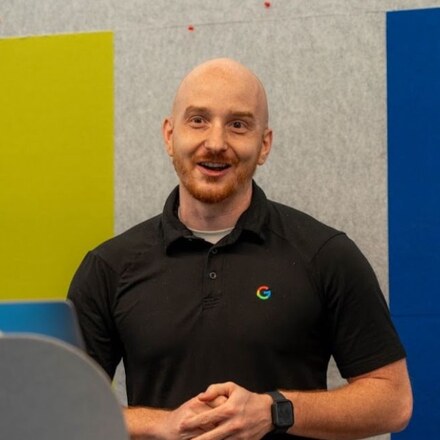
Right now I lead AI engineering and product at Laminar, where we build agents and delivery platforms that take enterprise software work from ticket to release. I own Flow, our delivery product, and built our internal toolchain for builds, static analysis, code review, and deployment. Our Fortune 10 customers have cut implementation timelines by 55% and costs by 65%.
Before Laminar, I was Director of Product Management at Salesforce. I owned the Apex programming language and the tools developers use with it, including the sf CLI, the VS Code extensions, and the DX MCP server. The biggest thing I shipped was RunRelevantTests, which runs only the tests a change affects. It cut test time by more than 90% for over 100,000 developers.
Before that I spent five years at Google. I started as tech lead on the case management system People Operations used to support more than 200,000 employees and vendors, and during the pandemic it ran things like office transfers, remote work, and vaccine policy. I built our DevOps platform, and the practices we set there became the standard for how Salesforce teams do DevOps. I also wrote Google’s Apex style guide. By the end I managed a team of 12, and we shipped Google’s first AI features on its third-party platforms, including AI code review that cut review hours by 40%.
Machine learning and AI
I started with a BS in Mathematics from the University of Wisconsin-La Crosse, then went straight into enterprise software engineering. I went deep there, and even earned an MS in Software Engineering from the University of Minnesota along the way. About ten years in, I realized I didn’t like the shape my career was taking. I had gotten very good at building enterprise software, and in the process I’d walked away from the hard academic challenge of math and computer science. So I went back for master’s degree number two, an MS in Artificial Intelligence from UT Austin. The AI program covered the core of the field in depth: machine learning, deep learning, reinforcement learning, optimization, and generative models.
Today, ML and AI are the focus of my career. My first production AI work was at Google, where I led case summarization and AI-drafted email replies for our case management system. Together they cut the time spent working each case by 30%.
I’ve written about the fundamentals in Back to the Basics of Machine Learning and Decision Trees.
Why Salesforce keeps showing up
I’ve spent most of my career on Salesforce, and it turned out to be a good place to learn developer experience. It has a proprietary language, mandatory test coverage, slow deployments, and a huge community of developers who feel every one of those pain points. Most of what I know about making engineers faster, I learned by working on those problems. The same lessons apply to any platform, and to AI coding tools most of all.
Where I’m headed: Most people still know me as a Salesforce specialist, and I’m working to change that. I am now building ML and AI products, and I want to help other developers gain the ML experience they need to be successful in the future.